
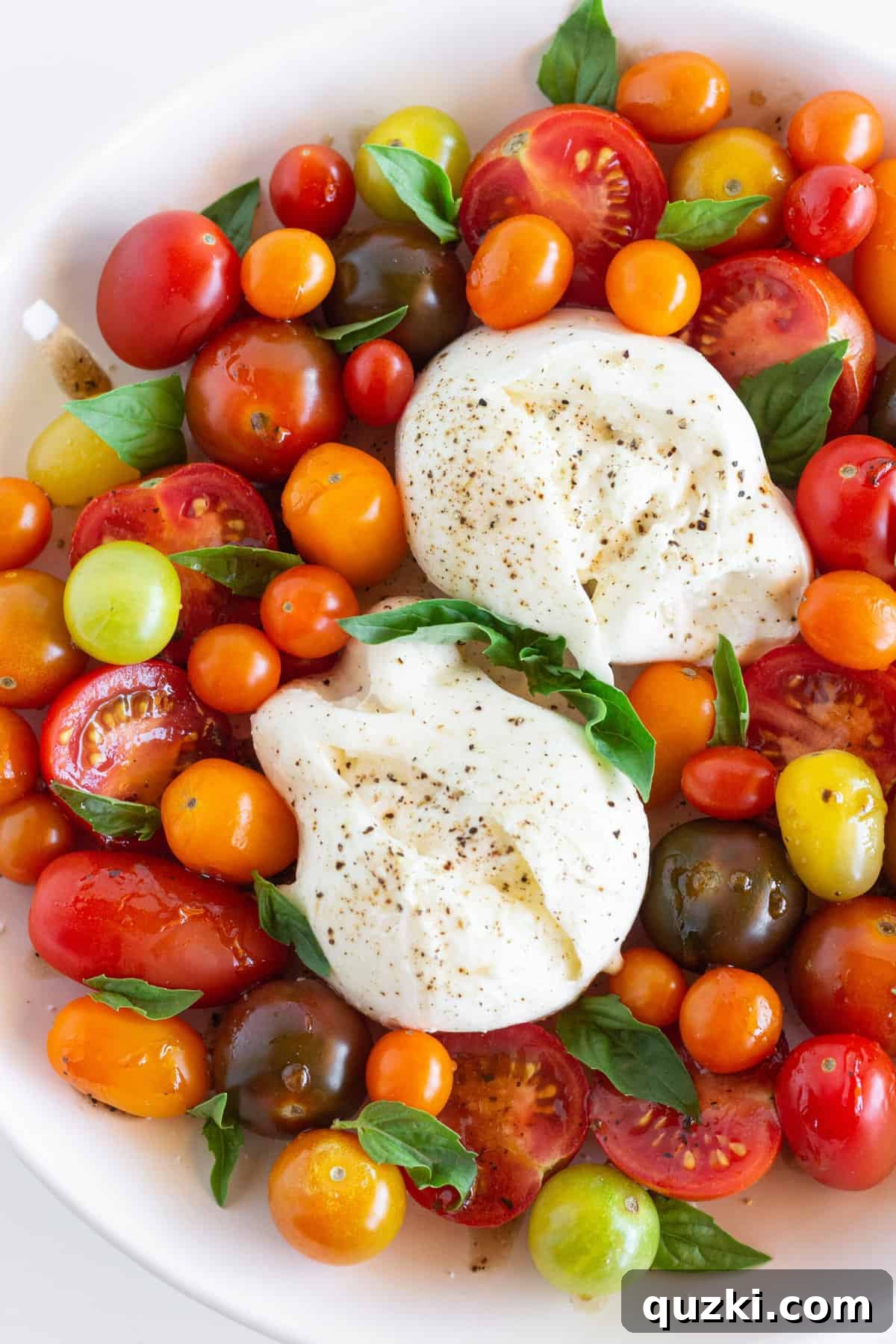
Experience the Taste of Summer: The Ultimate Burrata Caprese Salad
As the warm embrace of summer arrives, so does the irresistible call for fresh, vibrant flavors. And few dishes embody this seasonal delight quite like a classic Caprese salad. However, we’re taking it a step further, elevating this beloved Italian staple with the luxurious addition of creamy burrata cheese. Imagine plump, sun-ripened tomatoes, aromatic fresh basil, and the exquisite, melt-in-your-mouth texture of burrata, all brought together with a delicate drizzle of tangy balsamic vinaigrette. This Burrata Caprese Salad isn’t just a meal; it’s an experience, a symphony of freshness and richness that promises to enchant your palate with every single bite. It’s an effortlessly elegant dish, perfect for any summer gathering, whether you’re hosting a barbecue or simply enjoying a quiet evening al fresco. Trust us, once you try this rendition, you’ll be utterly captivated!
For more delectable Caprese-inspired creations, don’t miss our delightful Caprese Tart!
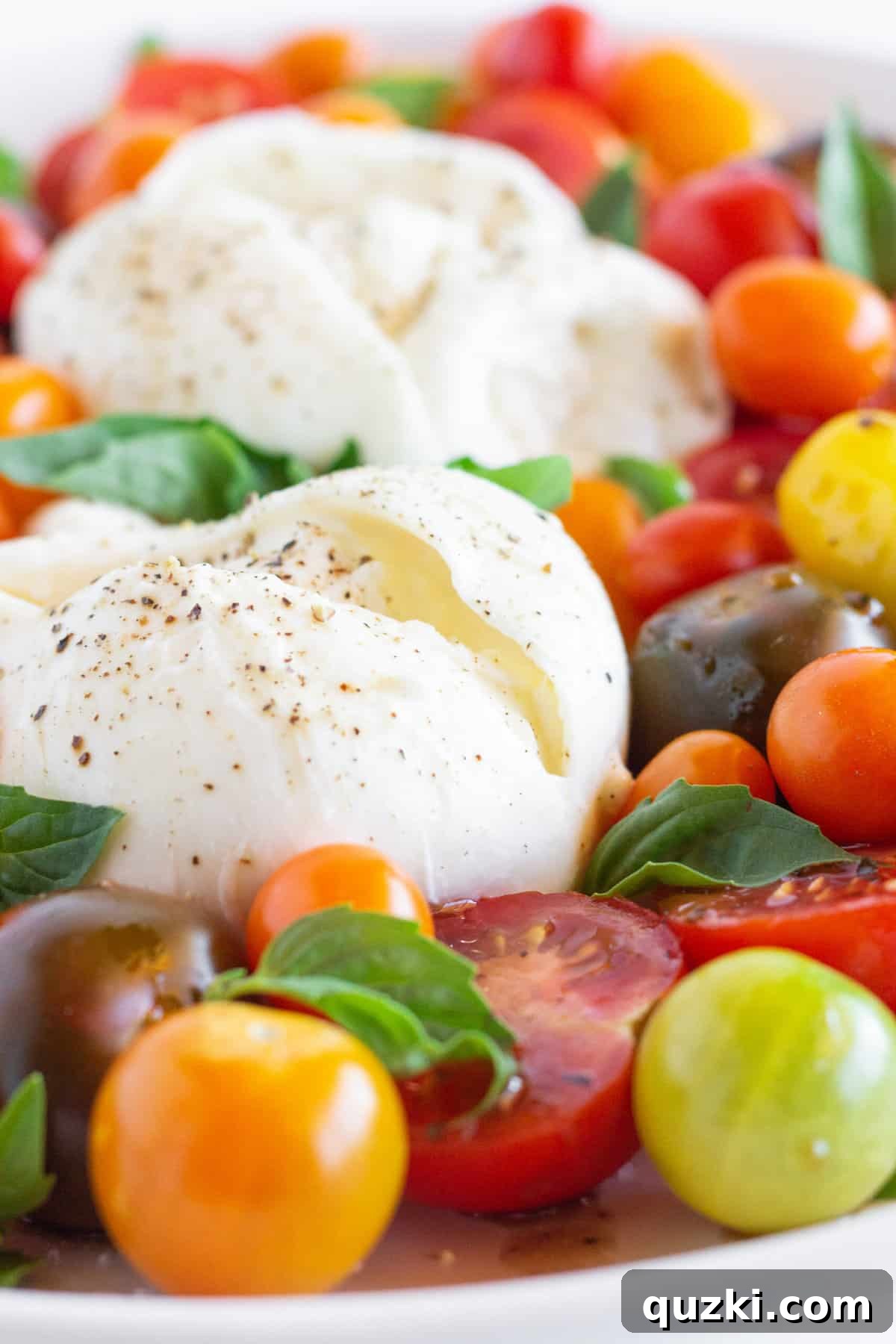
Understanding the Classic: What is Caprese Salad?
The Caprese salad, or Insalata Caprese, is a timeless Italian salad renowned for its simplicity and vibrant ingredients. It typically features slices of fresh mozzarella, ripe tomatoes, and fragrant basil leaves, often seasoned with a sprinkle of salt, pepper, and a generous drizzle of olive oil. Its origins are often attributed to the enchanting island of Capri, nestled in the Bay of Naples, where it is said to have been created to honor the colors of the Italian flag: red (tomatoes), white (mozzarella), and green (basil). This patriotic color scheme makes Caprese not only delicious but also visually appealing, a true celebration of Italian culinary heritage.
Traditionally, Caprese salad is presented in a layered fashion. Thick slices of fresh, milky mozzarella are alternated with equally substantial slices of juicy, ripe tomatoes. A single, vibrant basil leaf is then tucked between each layer, creating a beautiful and appetizing stack. While extra virgin olive oil is a standard finishing touch, some variations also incorporate a splash of balsamic vinegar or a richer balsamic glaze to add an extra layer of sweetness and acidity. The key to an outstanding Caprese lies in the quality of its components: using the freshest possible ingredients ensures a truly authentic and unforgettable taste.
The Allure of Burrata Cheese: A Creamy Revelation
If you haven’t yet had the pleasure of tasting burrata cheese, you are truly missing out on a unique culinary delight! Burrata is an Italian cow’s milk cheese, or sometimes buffalo milk, crafted in the Puglia region. It belongs to the pasta filata family, much like mozzarella, but it boasts a distinctive, more luxurious character. From the outside, a ball of burrata closely resembles a fresh mozzarella ball, appearing firm and pristine white. This initial resemblance, however, belies the incredible secret held within its delicate outer shell.
The magic of burrata reveals itself once you cut into it. Unlike solid mozzarella, burrata is a masterpiece of texture. Its exterior is a thin layer of solid mozzarella, but the interior is filled with a rich, soft, stringy curd known as stracciatella, which is essentially shredded mozzarella mixed with fresh cream. This creamy, almost liquid center creates an unparalleled sensory experience. When sliced open, the luscious cream and curds gently ooze out, offering a spreadable, incredibly delicious texture that is both buttery and slightly sweet. This exquisite creaminess makes burrata a showstopper, transforming any dish it graces into something truly special. It’s this contrast between the firm outer layer and the molten, decadent interior that sets burrata apart and makes it such a prized ingredient in Italian cuisine and beyond.
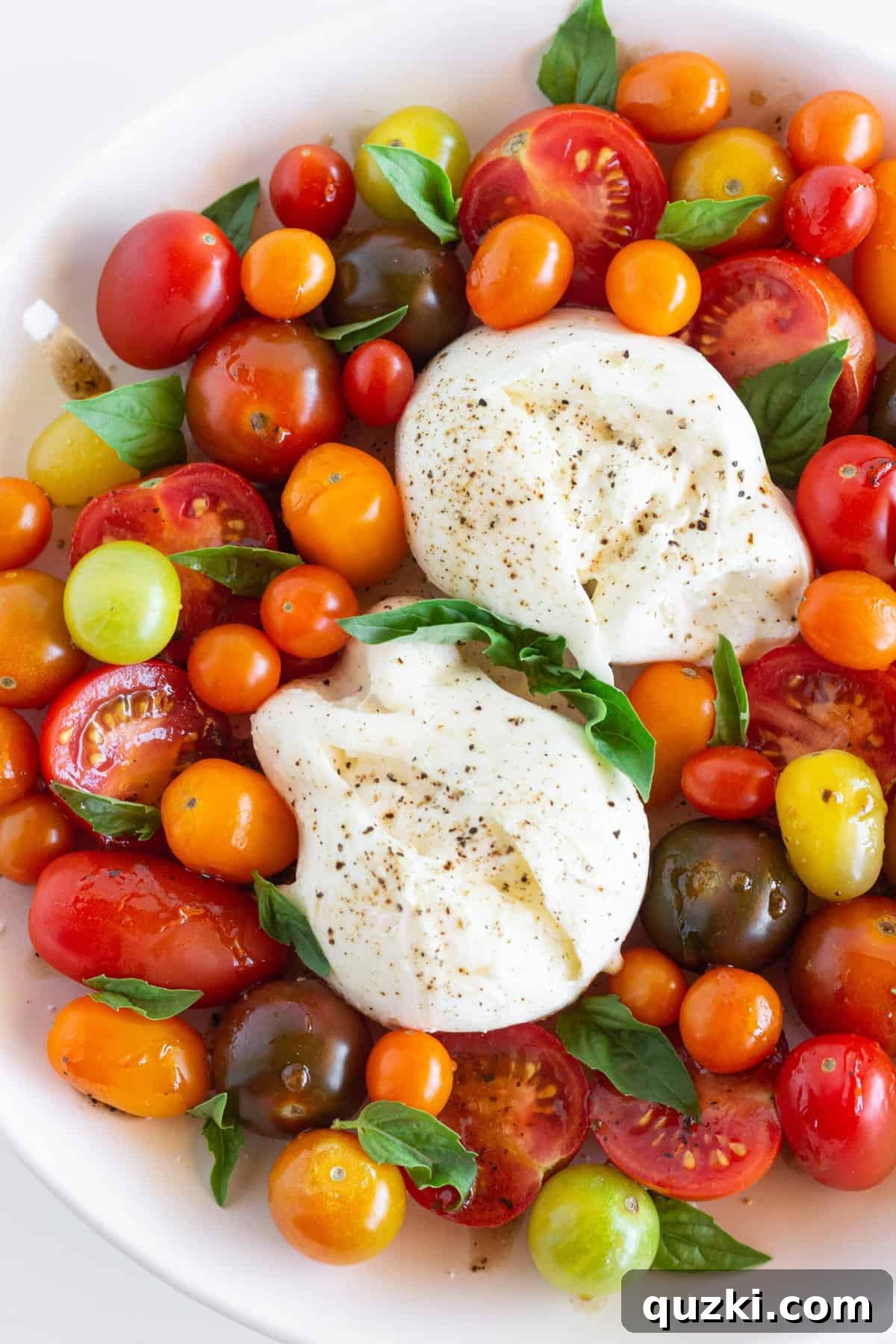
Essential Ingredients for the Perfect Burrata Caprese
Creating an extraordinary Burrata Caprese salad requires attention to the quality and variety of your ingredients. While the concept is simple, the right components can elevate this dish from good to absolutely phenomenal. Here’s a closer look at what you’ll need and some tips for selecting the best ones:
- Burrata Cheese: This is the star of our show. We recommend using two balls of fresh burrata cheese to ensure a wonderfully generous creamy texture and an amazing flavor profile. Look for burrata that feels soft and slightly yielding when gently squeezed, indicating a fresh, rich interior.
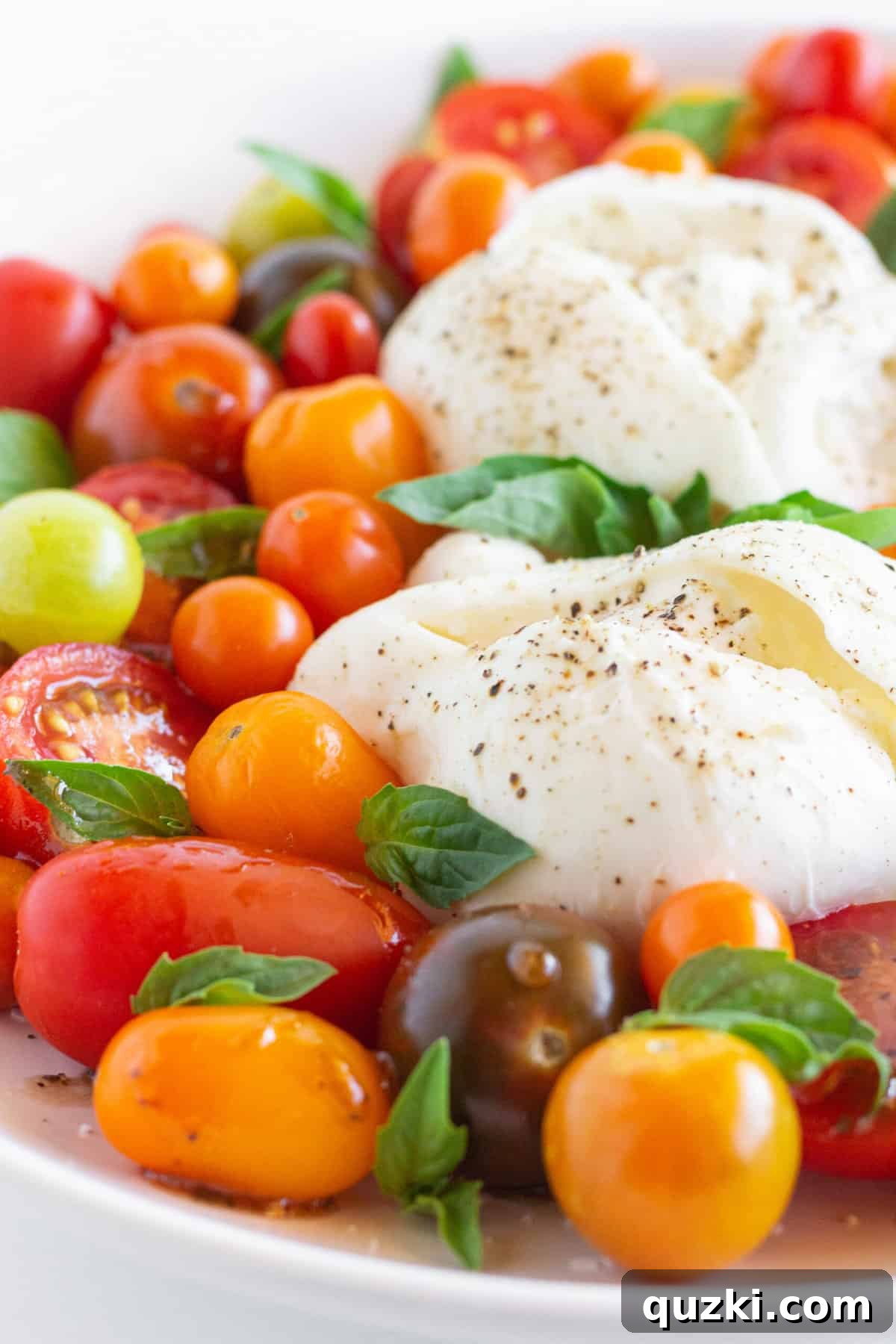
- Tomatoes: The essence of summer! To create a visually stunning and flavor-rich salad, use a variety of ripe tomatoes. A combination of Campari, mini heirloom, cherry tomatoes, and even tiny “sprinkle” tomatoes adds diverse colors, shapes, and subtle differences in sweetness and acidity. Choose tomatoes that are firm but yield slightly to pressure, with bright, unblemished skins. The more colorful, the better!
- Basil Leaves: Fresh basil is non-negotiable for Caprese. Small, tender basil leaves are ideal for garnishing, providing a burst of aromatic, peppery sweetness. For the best flavor, pick basil that is vibrant green and free from wilting or dark spots. Tear the leaves rather than cutting them to prevent bruising and preserve their delicate oils.
- Balsamic Vinaigrette or Glaze: While a drizzle of high-quality extra virgin olive oil is classic, a good balsamic vinaigrette or a thick, sweet balsamic glaze truly enhances the dish. Newman’s Own offers a reliable balsamic vinaigrette, but feel free to choose your favorite brand or even make your own. A glaze will provide a sweeter, more concentrated balsamic flavor and a beautiful artistic flourish.
- Salt and Freshly Ground Black Pepper: Simple seasonings are crucial. Kosher salt and freshly cracked black pepper will bring out the natural flavors of the tomatoes and burrata without overpowering them.
Step-by-Step Guide: Crafting Your Exquisite Burrata Caprese
Assembling this magnificent Burrata Caprese salad is remarkably straightforward, requiring minimal effort for maximum impact. The key is in the presentation and allowing the fresh ingredients to shine. Follow these simple steps to create a dish that looks as impressive as it tastes:
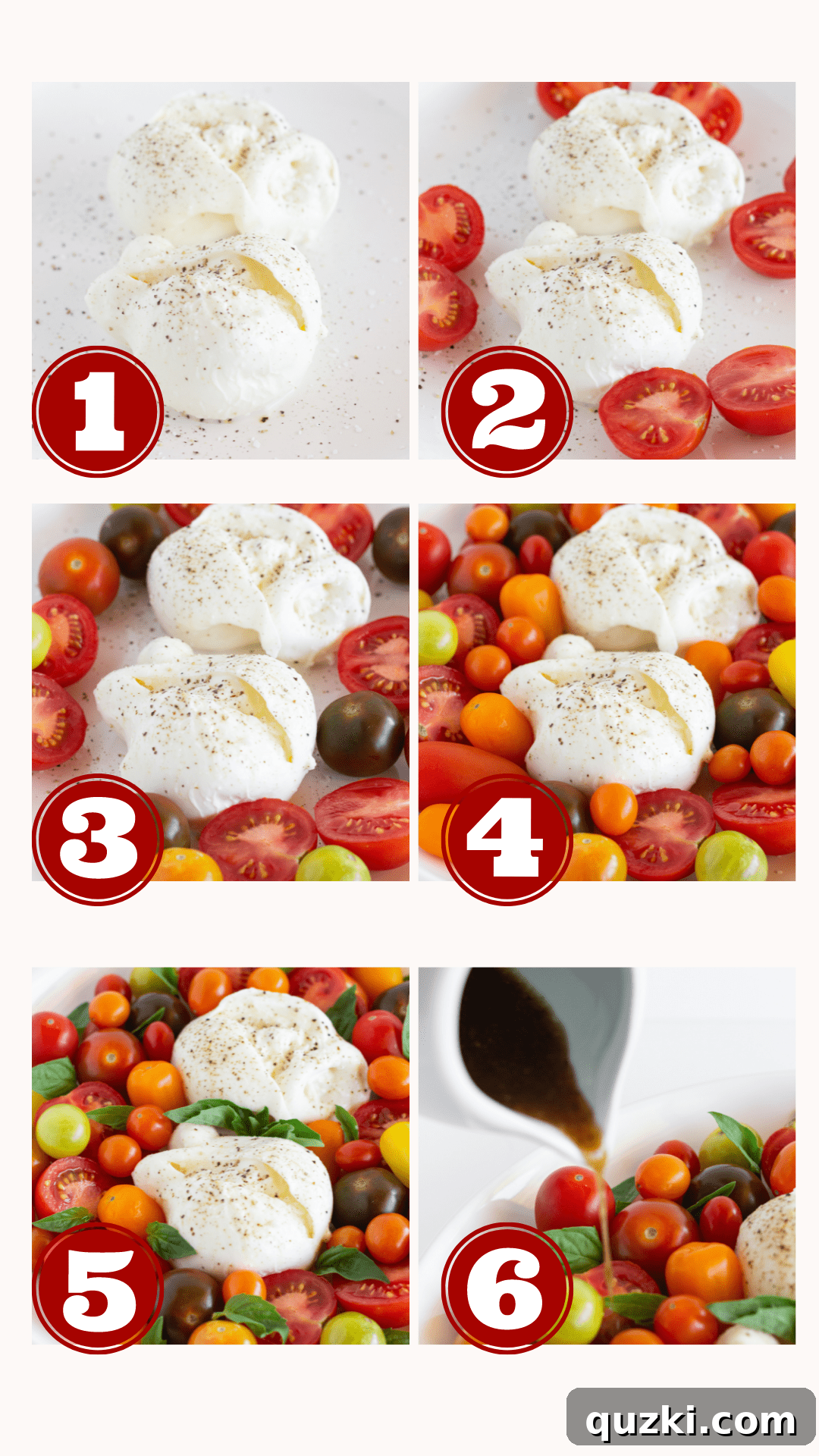
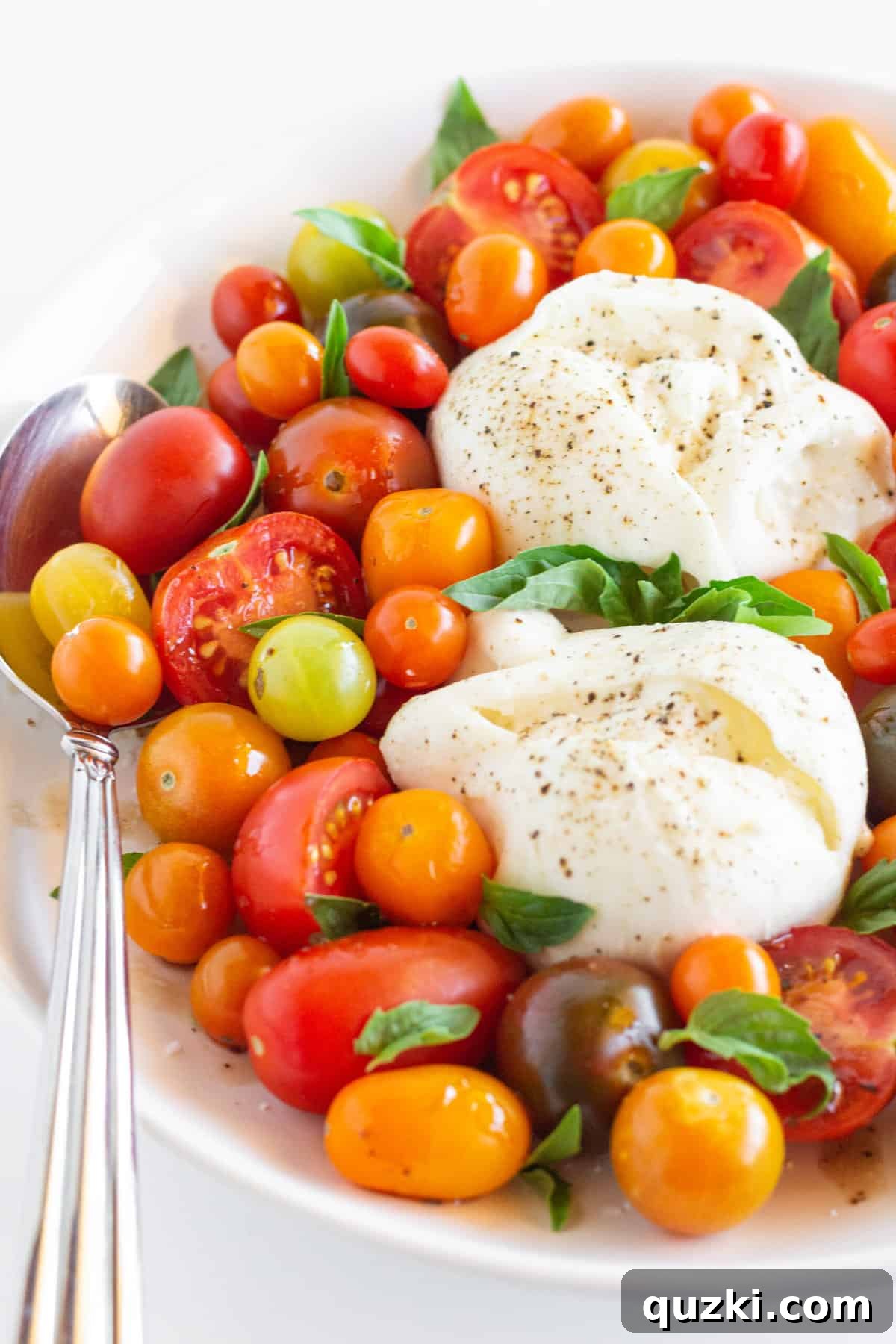
- Begin by carefully placing the two balls of burrata cheese in the center of a medium-sized serving platter. Using a sharp knife or your fingers, gently break each burrata open slightly, just enough to expose some of the creamy stracciatella interior. This invites the dressing to seep in and makes for a more appealing presentation. Season the exposed cheese generously with a sprinkle of kosher salt and freshly ground black pepper to enhance its inherent creaminess.
- Next, artfully arrange your chosen variety of tomatoes around the burrata cheese. If using larger tomatoes like Campari, cut them in halves or quarters. Scatter the mini heirloom, cherry, and sprinkle tomatoes (tiny tomatoes) amongst them. The goal is to create a vibrant, colorful mosaic around the central burrata. Don’t be afraid to mix and match sizes and hues; the visual appeal is a significant part of this salad’s charm. You can use whatever tomato varieties you have on hand or prefer, ensuring they are ripe and flavorful.
- Generously sprinkle the small, fresh basil leaves all over the tomatoes and burrata. The basil not only adds its signature peppery-sweet aroma and flavor but also contributes to the beautiful Italian flag color palette.
- Finally, with a flourish, drizzle your chosen balsamic vinaigrette or balsamic glaze over the entire salad. The balsamic adds a delightful tang and a touch of sweetness that perfectly complements the rich burrata and juicy tomatoes. Serve immediately to enjoy the peak freshness and texture of the burrata. If you have any leftovers, cover the platter tightly and store it in the refrigerator for up to 3 days, although this salad is truly best enjoyed fresh.
Elevate Your Salad: Burrata Caprese Recipe Variations
While the classic Burrata Caprese is a masterpiece in itself, there are countless delicious ways to customize and enhance this recipe, taking your summer salad to new gastronomic heights. By simply incorporating one or more additional ingredients, you can introduce exciting new flavors, textures, and even colors:
- Sliced Avocado: For an extra layer of creamy richness and a boost of healthy fats, add thin slices of ripe avocado. Its buttery texture pairs beautifully with the burrata and tomatoes, adding another fresh element.
- Pesto Drizzle: If you crave an intensified basil flavor or happen to be short on fresh basil leaves, a swirl of vibrant green pesto can be a fantastic substitute or addition. Pesto introduces a nutty, garlic-infused dimension that complements the Caprese components wonderfully.
- Mozzarella Substitution: Burrata cheese, while divine, can sometimes be challenging to find. In such cases, high-quality fresh mozzarella serves as an excellent substitute. You can use thickly sliced fresh mozzarella or small mozzarella pearls (bocconcini or ciliegine) for a similar visual and textural appeal.
- Sliced Red Onion: For those who appreciate a sharper, more pungent flavor and a delightful crunch, thinly sliced red onion can be a superb addition. It provides a striking color contrast and a zesty bite that cuts through the richness of the cheese.
- Seasonal Fruit Additions: Don’t limit your Caprese to just savory components! Sweet, ripe fruits such as peaches, watermelon cubes, or sliced strawberries introduce a surprising and refreshing counterpoint to the savory elements. Their juiciness and natural sweetness create a balanced and intriguing flavor profile, particularly lovely during peak summer.
- Crunchy Nuts: Toasting a handful of nuts like pecans, pistachios, or pine nuts and scattering them over the salad adds a delightful crunch and a subtle nutty flavor. This textural contrast elevates the salad, making each bite more interesting.
- Cured Meats: For a heartier version, consider adding thin slices of prosciutto or speck. The salty, savory notes of these cured meats provide a wonderful contrast to the fresh, creamy elements.
- Grilled Vegetables: Lightly grilled zucchini, bell peppers, or asparagus can be a fantastic way to add a smoky depth and tender texture, transforming the salad into an even more substantial side or light main.
Frequently Asked Questions About Burrata Caprese
Can Burrata Caprese be made ahead of time?
While this Burrata Caprese recipe is undoubtedly at its peak when eaten fresh, certain components can be prepared in advance to save time. For instance, you can slice and arrange your tomatoes on the platter ahead of time. Keep all the elements—the burrata, basil, and dressing—separate and chilled. Then, when you’re ready to serve your Burrata Caprese Salad, simply place the burrata, scatter the basil, and drizzle with the dressing. This quick assembly ensures the salad remains fresh, vibrant, and the burrata retains its exquisite texture, preventing the tomatoes from becoming soggy.
How do you eat Caprese?
Caprese salad, especially with burrata, is wonderfully versatile and can be enjoyed in numerous ways. It serves beautifully as an elegant appetizer, offering a refreshing start to any meal. It can also make a delightful and light lunch, perhaps paired with some crusty bread. Furthermore, its fresh and vibrant profile makes it an excellent side dish for dinner, complementing grilled chicken, steak, fish, or even pork. Its simplicity and deliciousness mean you’ll find yourself reaching for this super versatile recipe for many different occasions, from casual family dinners to more formal summer entertaining.
What is the difference between Mozzarella and Burrata?
Both mozzarella and burrata are exquisite semi-soft Italian cheeses, traditionally made from cow’s milk (though buffalo milk versions exist for both). They share a creamy texture, a pristine white color, and are undeniably delicious. However, their internal structure sets them apart. Mozzarella, particularly fresh mozzarella, is made by stretching and pulling the cheese curds, resulting in a more elastic, springy, and uniform texture. It’s often stored in brine to maintain its moisture. Burrata, on the other hand, takes mozzarella a step further. It begins with an outer shell of solid mozzarella, which is then filled with a mixture of soft, stringy mozzarella curds (stracciatella) and fresh cream. This unique filling gives burrata its signature incredibly soft, creamy, and almost liquid center, making it far more decadent and spreadable than traditional mozzarella. It’s this surprise creamy core that makes burrata so special.
What does Burrata go well with?
Burrata’s rich, creamy texture and mild, milky flavor make it incredibly versatile, pairing well with an array of dishes. It’s truly wonderful on just about anything! Consider adding it as a luxurious topping to a freshly baked pizza after it comes out of the oven, allowing its warmth to soften it slightly. It’s also fantastic served alongside grilled or roasted vegetables like asparagus, bell peppers, or zucchini, where its creaminess contrasts beautifully with the smoky char. Burrata is also a divine addition to pasta dishes, especially those with fresh, light sauces. What many adore most about burrata cheese is that its outer layer provides the familiar chew of mozzarella, but when you break into it, you’re greeted with a creamy, rich, and utterly delicious surprise inside.
Is Burrata a good melting cheese?
While burrata can soften and become warmer when exposed to heat, it’s generally not considered an ideal “melting” cheese in the same way traditional mozzarella is. If your goal is to achieve a gooey, stretchy melt, fresh mozzarella or other dedicated melting cheeses would be a better choice. Burrata is best served cold or at room temperature, where its distinct creamy texture and oozing stracciatella filling can be fully appreciated. Cooking burrata extensively can cause it to lose its unique creamy interior, transforming it into a more uniform, melted consistency akin to mozzarella. However, a slight warming, such as placing it on a hot pizza for the last few minutes of baking, can be delightful, allowing the cream to gently warm and become even more fluid without fully losing its character.
How do you store Burrata Caprese?
Leftover Burrata Caprese can be kept in the refrigerator for a couple of days, though its peak freshness and texture are enjoyed immediately after preparation. To store, ensure the Caprese salad is covered tightly with plastic wrap or placed in an airtight container. While it will still be delicious, keep in mind that the tomatoes may release more liquid, and the basil might slightly wilt over time. For the best experience, try to consume leftovers within 1 to 2 days, and always remember that it is truly at its best when served fresh.
Why is Burrata Caprese the ultimate summer dish?
Burrata Caprese stands out as the ultimate summer dish for several compelling reasons. Firstly, it champions seasonal produce, featuring ripe, flavorful tomatoes and fresh, aromatic basil that are abundant during warmer months. This reliance on peak-season ingredients guarantees an explosion of natural flavors that artificial substitutes simply cannot replicate. Secondly, its preparation is quick and requires no cooking, making it an ideal choice for hot summer days when you prefer to minimize time spent in a warm kitchen. It’s a light yet satisfying dish that won’t leave you feeling heavy. Lastly, its vibrant colors and artful presentation make it incredibly appealing and a natural centerpiece for any summer gathering or outdoor meal. It’s the perfect blend of simplicity, elegance, and refreshing taste that perfectly encapsulates the essence of summer.
More Delightful Salad Recipes to Explore!
If you’ve enjoyed the fresh and vibrant flavors of our Burrata Caprese, you’ll love exploring these other fantastic salad recipes. Each one offers a unique combination of ingredients and textures, perfect for any occasion:
- Fiesta Wedge Salad
- Broccoli Salad with Poppyseed Dressing
- Cucumber and Pickled Shallot Salad
- Chicken Salad with Grapes and Almonds
- Easy Bruschetta Salad Recipe
- Harvest Salad Recipe with Apples
Burrata Caprese Recipe
By: June Albertson-Dick
Burrata cheese is made even better with the addition of different varieties of tomatoes, fresh basil, and balsamic vinaigrette (or glaze).
Prep Time: 15 mins
Total Time: 15 mins
Servings: 6 servings
Ingredients
- 2 balls burrata cheese
- ½ teaspoon kosher salt
- ¼ teaspoon black pepper
- 3-4 cups tomatoes, {use different varieties like Campari, mini heirloom, cherry, and sprinkle tomatoes}
- 15-20 small basil leaves
- 3 Tablespoons balsamic vinaigrette, {or balsamic glaze}
Instructions
- Place the balls of burrata in the middle of a medium platter. Gently break each of them open slightly to expose the creamy interior and season with salt and pepper.
- Arrange tomatoes around the burrata cheese. A beautiful display can be created by using a variety of halved Campari tomatoes, mini heirloom tomatoes, cherry tomatoes, and sprinkle tomatoes (tiny tomatoes). Feel free to use any combination of ripe tomatoes you prefer or have on hand.
- Sprinkle the small basil leaves generously all over the tomatoes and burrata, ensuring even distribution for both flavor and visual appeal.
- Top the entire salad with a drizzle of balsamic vinaigrette or a rich balsamic glaze. Serve immediately to savor its freshness. Leftovers can be stored in the refrigerator for up to 3 days in an airtight container, but for the best taste and texture, it is always recommended to serve this dish fresh.
Nutrition Information
| Serving: | 1 serving |
| Calories: | 42 kcal |
| Carbohydrates: | 3g |
| Protein: | 1g |
| Fat: | 3g |
| Saturated Fat: | 0.3g |
| Polyunsaturated Fat: | 0.1g |
| Monounsaturated Fat: | 0.03g |
| Cholesterol: | 0.2mg |
| Sodium: | 265mg |
| Potassium: | 181mg |
| Fiber: | 1g |
| Sugar: | 2g |
| Vitamin A: | 676 IU |
| Vitamin C: | 10mg |
| Calcium: | 12mg |
| Iron: | 0.2mg |
Nutrition information is automatically calculated and should only be used as an approximation.
Enjoyed this recipe? Your feedback means a lot! Please leave a comment or rating below!