
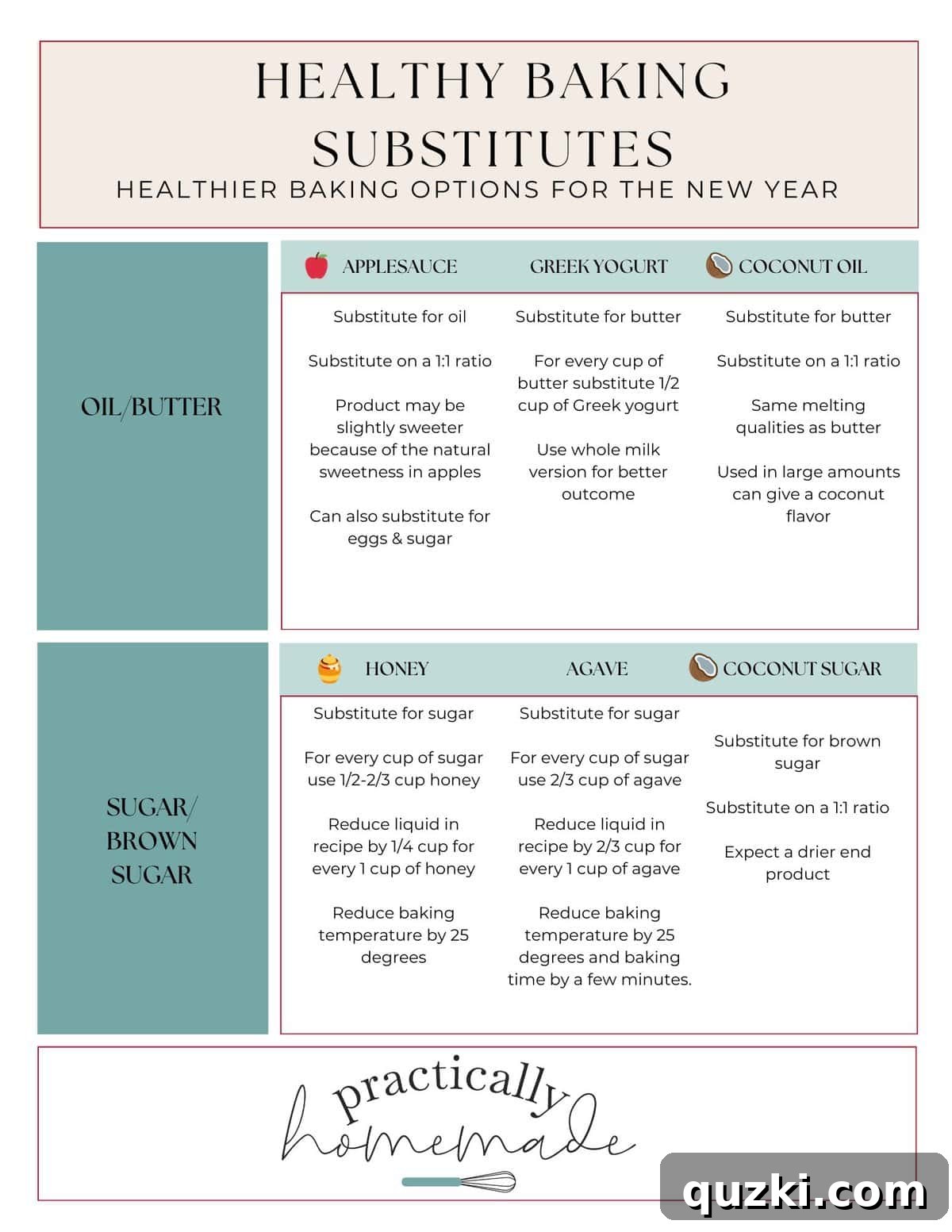
As the New Year unfolds, many of us turn our attention towards healthier habits, and diet often tops that list. The good news is that embracing a more wholesome lifestyle doesn’t mean banishing all your favorite sweet treats. In fact, with a few clever adjustments, you can continue to enjoy delicious baked goods while making them more aligned with your health goals. This guide delves into the world of healthy baking substitutes, offering practical swaps that can significantly lighten your recipes without compromising on flavor or texture. To help you on your journey, I’ve compiled these essential Healthy Baking Substitutes into a convenient, free PDF for your kitchen.
Today, we’re going to explore simple yet impactful ways to transform your baking, making your final products more “figure-friendly” and nutritious. The secret lies in understanding and utilizing effective healthy baking substitutes. Small, consistent changes can lead to remarkable long-term benefits. Our aim is to cultivate lasting, sustainable dietary habits that seamlessly integrate into our lives, now and for years to come. It’s about balance, mindful choices, and ultimately, finding joy in food that nourishes both body and soul.
I often share a plethora of wonderful and indulgent dessert recipes because, quite frankly, baking brings me immense joy. My philosophy revolves around balancing those delightful cookies with equally delicious, healthy alternatives. It’s about enjoying life’s simple pleasures without feeling restricted, and certainly not about striving for an unrealistic size. It’s about embracing where you are, most days, and making conscious choices to feel your best.
So, let’s dive into some fantastic substitutions you can incorporate to make your baking healthier this year. Remember to scroll down to the bottom of the page to download your free, printable Healthy Baking Substitutes PDF. This handy resource will be a perfect addition to your kitchen, ready whenever you decide it’s time to “healthify” a recipe.
Healthy Baking Substitutes for Oil
Reducing oil in baking is one of the easiest ways to cut down on saturated fats and calories. While oil adds moisture and tenderness, several natural alternatives can perform a similar function, often with added nutritional benefits.
Unsweetened Applesauce
Unsweetened applesauce is a truly versatile gem in healthy baking. It works exceptionally well as a direct replacement for oil in most baking recipes, typically in an equal 1:1 ratio. For instance, if a recipe calls for half a cup of oil, you can use half a cup of unsweetened applesauce instead.
One notable effect you’ll observe is a slightly sweeter end product. Applesauce contains natural sugars, which will impart a subtle sweetness that might allow you to slightly reduce the overall sugar content in the recipe too. Beyond its role as an oil substitute, applesauce is also an excellent stand-in for eggs and sugar. For those with egg allergies or simply looking to reduce cholesterol, using 1/4 cup of unsweetened applesauce per egg can be a game-changer. It adds moisture and helps bind ingredients, making it ideal for muffins, quick breads, and certain cakes. Furthermore, the pectin in applesauce contributes to a tender crumb, mimicking some of the structural properties of oil and eggs.
When choosing applesauce, always opt for the unsweetened variety to maintain control over your recipe’s sweetness level. This ensures you’re adding pure fruit goodness without any unnecessary added sugars.
Healthy Baking Substitutes for Butter
Butter is often the cornerstone of many baked goods, contributing to richness, flavor, and texture. However, its high saturated fat content can be a concern. Fortunately, several fantastic alternatives can provide similar results with a healthier profile.
Greek Yogurt
Greek yogurt is an outstanding substitute for butter, especially when you’re aiming for a moist, tender crumb with a hint of tang. It can typically be substituted at a ratio of 1/2 cup of Greek yogurt for every 1 cup of butter. This swap significantly reduces the fat and calorie content while adding a boost of protein.
While any version of Greek yogurt will work, using a whole-milk variety often yields a slightly better outcome. The residual fat in whole-milk Greek yogurt helps maintain some of the desired richness and mouthfeel that butter provides, without the excessive saturated fat. One of the best aspects of using Greek yogurt is its ability to impart a rich, tangy flavor, much akin to buttermilk, which can elevate the complexity of your baked goods. It’s particularly effective in muffins, cakes, and quick breads, where moisture and a soft texture are key.
Coconut Oil
Coconut oil is another excellent and straightforward substitute for butter. It can be replaced in an equal 1:1 ratio. Its popularity stems from its similar physical properties to butter: it’s solid at room temperature and melts beautifully when heated, then solidifies again upon cooling. This makes it versatile for greasing pans as well.
When using coconut oil, consider whether you want a subtle coconut flavor in your final product. Refined coconut oil has a neutral taste, making it ideal for recipes where you don’t want any coconut notes. Unrefined (virgin) coconut oil, on the other hand, retains a distinct coconut aroma and flavor, which can be delightful in certain tropical-inspired baked goods. The only potential drawback is that if used in large quantities, especially the unrefined variety, it might impart a noticeable coconut taste that could overwhelm other flavors in your recipe. However, its healthy fatty acid profile makes it a much-preferred alternative to traditional butter.
Healthy Baking Substitutes for Sugar
Reducing refined sugar intake is a top priority for many health-conscious bakers. While sugar provides sweetness and contributes to texture and browning, several natural sweeteners can achieve similar results with added benefits.
Honey
Honey is a wonderful natural alternative to granulated sugar, offering a distinct flavor profile and additional nutrients. When substituting honey for sugar, you’ll want to use about 1/2 to 2/3 cup of honey for every 1 cup of sugar called for in the recipe. Honey is significantly sweeter than granulated sugar, so less is often more.
Because honey is approximately 20% water, it introduces additional liquid to your recipe. To maintain the correct consistency, be sure to reduce the total liquid content in your recipe by about 1/4 cup for every 1 cup of sugar replaced with honey. Honey also caramelizes faster and at a lower temperature than sugar due to its higher fructose content. To prevent your baked goods from over-browning or burning, it’s wise to reduce your oven’s baking temperature by 25 degrees Fahrenheit and monitor your baking time closely.
Beyond sweetness, honey contributes beneficial antioxidants and can add a lovely golden hue and complex flavor notes to your treats.
Agave
Agave nectar, derived from the agave plant, is another popular liquid sweetener with a neutral flavor profile that blends seamlessly into most recipes. When substituting agave for granulated sugar, use approximately 2/3 cup of agave for every 1 cup of sugar.
Similar to honey, agave is a liquid sweetener, so you’ll need to adjust other liquid components in your recipe. For every 1 cup of sugar replaced with agave, reduce the overall liquid in the recipe by about 1/4 to 1/3 cup. Agave also has a high fructose content, which means it browns faster. To prevent scorching, reduce your baking temperature by 25 degrees Fahrenheit and consider shortening the baking time by a few minutes. Agave’s relatively low glycemic index compared to table sugar makes it an appealing option for those monitoring blood sugar levels, though it should still be used in moderation.
Healthy Baking Substitutes for Brown Sugar
Brown sugar adds a distinctive moistness and caramel flavor to baked goods. While delicious, it’s still primarily refined sugar. Enter coconut sugar, a fantastic alternative.
Coconut Sugar
Coconut sugar is an excellent 1:1 substitute for brown sugar in virtually any recipe. It looks and tastes remarkably similar to brown sugar, offering delightful caramel notes without the refined sugar content. It’s often touted for containing trace minerals like iron, zinc, calcium, and potassium, and has a slightly lower glycemic index than regular table sugar.
One key difference to be aware of is that coconut sugar doesn’t hold moisture quite as effectively as brown sugar does. This means that your finished baked goods might turn out a little drier or denser than they would with traditional brown sugar. To counteract this, you might consider adding a tiny bit more liquid (e.g., a tablespoon of milk, applesauce, or yogurt) to your batter when using coconut sugar, especially in recipes where moisture is paramount. Despite this minor adjustment, coconut sugar is a superb way to add natural sweetness and depth of flavor to your healthier bakes.
Additional Healthy Baking Swaps for a Wholesome Touch
Beyond the primary substitutes, there are many other ingredients you can strategically swap to boost the nutritional value of your baked goods.
Ripe Bananas or Pumpkin Puree (for Oil/Eggs/Sugar)
Similar to applesauce, mashed ripe bananas and pumpkin puree are fantastic for adding moisture, natural sweetness, and a wealth of nutrients. Use 1/4 cup of mashed banana or pumpkin puree to replace one egg, or substitute up to half of the oil or butter in a recipe. They also allow you to reduce added sugar, as their natural sweetness is quite potent. These work wonders in muffins, quick breads, and even some cakes, adding fiber and vitamins while keeping things delightfully moist. Be mindful of the flavor they impart – banana is prominent, while pumpkin is milder and pairs well with spices.
Avocado (for Butter or Oil)
Avocado might sound unusual in baking, but it’s a brilliant substitute for butter or oil, bringing healthy monounsaturated fats and a creamy texture. Replace butter or oil with an equal amount of mashed ripe avocado (1:1 ratio). Its mild flavor is surprisingly undetectable in most baked goods, especially when paired with chocolate or strong spices. Avocado adds incredible moisture and richness, making it perfect for brownies, chocolate cakes, and muffins. You’ll get a beautiful green tint if you don’t have other strong colors, but often the color disappears during baking, especially in chocolate-based recipes.
Nut Butters (for Butter or Oil)
Natural peanut butter, almond butter, or cashew butter can replace some or all of the butter or oil in certain recipes. They add protein, healthy fats, and a distinct nutty flavor. The ratio depends on the consistency of your nut butter and desired outcome, but generally, you can substitute 1/2 to 1 cup of nut butter for every 1 cup of butter or oil. Be aware that this will significantly alter the flavor and texture, often resulting in a denser, chewier product. It’s fantastic for cookies, brownies, and energy bars.
Whole Wheat Flour (for All-Purpose Flour)
To boost fiber and nutrient content, gradually replace all-purpose flour with whole wheat flour. Start by substituting 25-50% of the all-purpose flour with whole wheat. Whole wheat flour absorbs more liquid and can result in a denser product, so you might need to increase the liquid in your recipe by a tablespoon or two per cup of whole wheat flour used. Whole wheat pastry flour is a lighter option that provides similar benefits with a less noticeable impact on texture, making it ideal for delicate bakes.
Stevia or Erythritol (for Sugar)
For those looking to drastically reduce calories and sugar, natural non-caloric sweeteners like stevia or erythritol can be effective. Follow the product’s instructions for substitution ratios, as they are often much sweeter than sugar. Keep in mind that these sweeteners don’t contribute to the structure or browning in the same way sugar does, so your baked goods might have a different texture (less tender, denser) and lighter color. They work best in recipes where sugar’s structural role is less critical, such as certain puddings or sauces, or combined with a small amount of regular sugar to aid structure.
General Tips for Successful Healthy Baking
Making healthy swaps is a journey, and a few general tips can ensure your success:
- Start Small: Don’t overhaul a beloved recipe all at once. Begin by replacing half the fat or a quarter of the sugar, then gradually increase the healthy substitutes as you get comfortable with the changes in texture and flavor.
- Read the Recipe Carefully: Understand the role each ingredient plays. This will help you predict how a substitute might affect the outcome.
- Adjust Liquids: As discussed, many liquid sweeteners or fruit purees add moisture, so be prepared to slightly reduce other liquids in the recipe.
- Monitor Baking Times and Temperatures: Healthier ingredients, especially alternative sugars, can brown faster. Keep an eye on your oven and reduce temperature if necessary.
- Embrace New Textures: Healthier baked goods might have a slightly different texture – perhaps a bit denser or moister. Be open to these subtle changes.
- Taste and Adjust: Don’t be afraid to taste your batter (safely!) and adjust seasonings or sweetness as needed.
- Add Fruits and Vegetables: Incorporate berries, shredded carrots, zucchini, or spinach for an extra boost of vitamins, fiber, and moisture.
- Use Dark Chocolate: When chocolate is called for, opt for dark chocolate with a high cocoa percentage (70% or more) for less sugar and more antioxidants.
Happy New Year, dear friends, and happy healthier baking! I truly believe that life is sweeter with delicious treats, and there’s no need to sacrifice them for your health goals. If this Healthy Baking Substitutes PDF helps you continue to enjoy the pleasure of baking while making nourishing choices, then I consider my job well done. Let’s make this year, and every year, a little bit healthier and a whole lot sweeter, one mindful bake at a time!